Flat Roof Ponding Repair & Low-Slope Drainage Triage in Little Rock, AR
Commercial low-slope buildings, downtown historical structures, and residential flat roof additions across Little Rock frequently experience dangerous water accumulation following heavy rains. When rainwater remains standing on a low-slope roof for more than 48 hours—defined as ponding water—it creates immense structural dead weight, degrades modified bitumen and single-ply seams, and accelerates catastrophic water intrusion. Roof Expert USA connects Little Rock property owners with licensed independent roofing contractors specializing in emergency drainage restoration, scupper clearance, and seamless silicone coating repairs.
1. Little Rock Severe Storm Dynamics & Weather Exposure
Little Rock's subtropical storm systems frequently dump two to three inches of rain in a single afternoon. On low-slope roofs with inadequate positive drainage slope (less than 1/4 inch per foot), water collects in structural depressions caused by rafter deflection or compressed insulation. Standing water acts as a magnifying lens for summer solar ultraviolet rays, accelerating asphalt degradation and softening modified bitumen seams. In winter, standing ponding water freezes into expanding ice sheets that pry open membrane laps, creating direct leak avenues into interior commercial spaces and residential ceilings. In addition, standing pools accumulate heavy organic debris, fostering moss and algae growth that eats away at asphaltic bitumen binders.
2. Non-Destructive Moisture Diagnostics & FLIR Thermal Tracing
Precision diagnostics are critical on low-slope roofs because water can migrate hundreds of feet between insulation layers before leaking into the building interior. Dispatched contractors conduct non-destructive moisture surveys using calibrated FLIR infrared thermal cameras during evening cool-down periods. Waterlogged polyisocyanurate roof insulation holds daytime solar heat longer than dry insulation, creating distinctive glowing thermal anomalies on infrared monitors that reveal the precise boundaries of subsurface saturation without destructive core cuts. Technicians also evaluate internal drain bowl integrity and plumbing drop lines using electronic inspection cameras.
Key Technical Engineering & Repair Protocols
- Emergency Drainage Sumping and Heavy Debris Scupper Clearing.
- 100% High-Solids Moisture-Cure Silicone Coatings Resisting Ponding Water.
- Non-Destructive Calibrated FLIR Infrared Thermal Moisture Deck Mapping.
- Independent Arkansas Contractors Licensed with Arkansas Contractors Licensing Board.
3. Step-by-Step Substrate Restoration & Weatherproofing Methodology
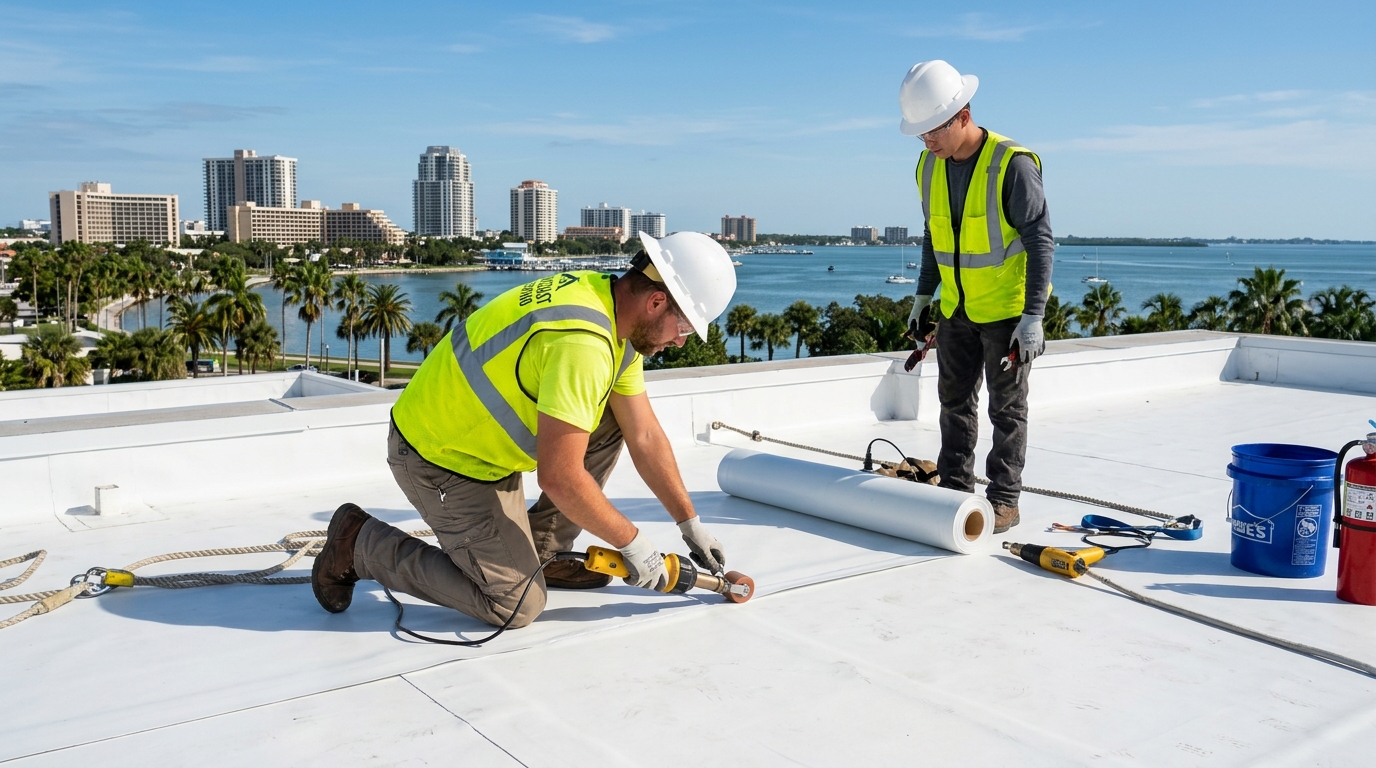
Substrate restoration involves clearing blocked internal drains, scuppers, and through-wall overflow outlets to relieve dangerous hydraulic weight immediately. For membrane repairs, technicians dry compromised areas, clean seams with industrial solvents, and install multi-ply SBS modified bitumen patches or heat-welded TPO membrane overlays. In severe ponding depressions, crews apply tapered insulation fill or flood coats of 100% high-solids moisture-cure silicone roof coating that withstands permanent water ponding without softening, chalking, or delaminating. All scupper flashings receive reinforced polyester fabric tape embedded in elastomeric acrylic mastic.
4. Arkansas Building Code Compliance & Contractor Licensing
All low-slope and flat roof restoration work complies with the Arkansas Fire Prevention Code (IBC Chapter 15) and municipal building codes enforced across Little Rock and North Little Rock. Dispatched independent contractors hold active licenses with the Arkansas Contractors Licensing Board under commercial roofing classifications. Crews operate in strict compliance with OSHA commercial roofing safety regulations (29 CFR 1926.501), utilizing warning lines, safety monitors, and mechanical tie-offs. Proper membrane flashing installation ensures full warranty eligibility and long-term building code compliance.
5. Preventative Property Maintenance & Severe Storm Preparedness
Property owners and facility managers in Little Rock should schedule semi-annual flat roof maintenance inspections each spring and autumn. Clearing oak leaves, acorns, and urban silt from scuppers and drain strainers prevents hydraulic backups during sudden downpours. Inspecting parapet wall counter-flashings and sealing weathered membrane seams annually extends low-slope roof service life and prevents costly emergency business interruptions. A proactive low-slope maintenance program preserves commercial real estate value across decades of unpredictable Arkansas severe weather, preventing localized ponding from destroying interior tenant operations.
Frequently Asked Questions
Why is ponding water dangerous on a Little Rock flat roof?
Ponding water adds massive structural weight (over 5 lbs per square foot per inch of depth), accelerates UV degradation of roofing membranes, and forces water through microscopic lap seams.
Can a ponding flat roof be repaired without complete tear-off?
Yes. In many cases, installing tapered insulation crickets to restore positive slope or applying a high-solids 100% silicone restoration coating resolves ponding and restores water-tight integrity.
How quickly should water drain from a flat roof after a storm?
According to national roofing industry standards and building codes, a properly designed flat roof should drain all standing stormwater within 48 hours under dry weather conditions.
Speak Directly with a Little Rock Dispatch Specialist
Zero web forms, zero digital delay. Direct telephone connection to on-call independent Arkansas contractors.
DISPATCH HOTLINE: (888) 208-4155