Emergency Roof Tarping & Post-Storm Enclosure in Little Rock, AR
When tornadic wind shear, falling oak limbs, or intense hail outbreaks rip shingles and puncture roof decking across Little Rock, temporary emergency roof tarping is the critical first line of defense. Standard retail tarps secured with loose bricks or perimeter nails routinely tear away in subsequent thunderstorm gusts, exposing bare roof framing to devastating rainwater intrusion. Roof Expert USA connects Central Arkansas property owners with licensed, independent roofing contractors specializing in engineered, high-wind emergency roof tarping and structural weather enclosure.
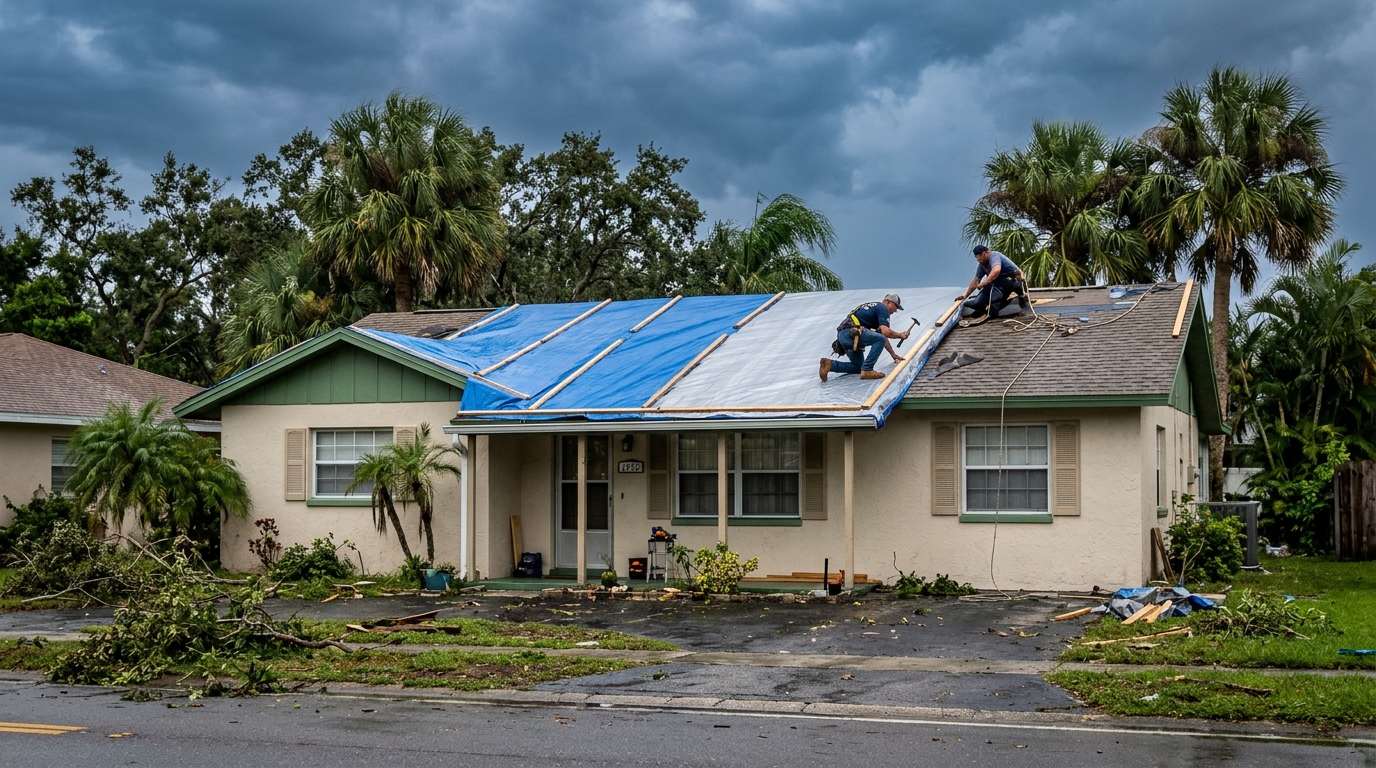
1. Little Rock Severe Storm Dynamics & Weather Exposure
High-velocity storm winds in Central Arkansas subject residential and commercial roofs to extreme aerodynamic suction forces. During tornadic squalls and severe microbursts, wind vortices wrapping around eaves and roof peaks create dynamic uplift pressures exceeding 70 pounds per square foot. These forces peel back large sections of asphalt shingles, rip felt underlayment from fastener lines, and expose raw OSB or plywood decking. Once decking is exposed, subsequent rain bands saturate wood fibers, causing immediate swelling, edge buckle, and loss of diaphragm shear strength. Improperly installed tarps act like sails under these turbulent conditions, violently pulling free and compounding structural damage. Furthermore, straight-line thunderstorm gusts frequently carry tree branches and flying debris that can puncture thin polyethylene membranes, making heavy-gauge puncture resistance essential.
2. Non-Destructive Moisture Diagnostics & FLIR Thermal Tracing
Professional emergency tarp deployment begins with a comprehensive structural safety evaluation. Technicians inspect roof trusses, rafters, and interior ceiling planes to verify structural load capacity before accessing damaged sections. Using non-destructive FLIR thermal imaging and drone aerial photography, crews determine the precise boundaries of moisture infiltration and exposed decking. This thorough diagnostic mapping ensures the tarp installation covers the entire catchment zone, extending well beyond visible damage boundaries to guarantee complete water shedding. Technicians also evaluate fastener pull-out resistance to ensure battens hold securely under dynamic wind loads.
Key Technical Engineering & Repair Protocols
- Heavy-Duty 12-Mil Cross-Laminated UV-Treated Woven Polyethylene Tarps.
- Continuous Dimensional Lumber Batten Anchoring into Structural Rafters.
- Ridge-Over Tuck Protocols Preventing High-Wind Driving Rain Penetration.
- Licensed Arkansas Contractors Operating 24/7 with OSHA Safety Compliance.
3. Step-by-Step Substrate Restoration & Weatherproofing Methodology
Engineered emergency tarping utilizes heavy-duty 12-mil cross-laminated woven polyethylene tarps engineered for extreme tensile tear resistance and UV stability. Dispatched crews measure and cut tarps to extend at least four feet beyond damaged roof areas in all directions. Tarps are wrapped around continuous dimensional 1x2 or 2x4 spruce-pine-fir wood battens and mechanically anchored directly through roof decking into structural rafters using heavy-gauge corrosion-resistant screws. Upper tarp edges are tucked beneath sound shingle courses or carried over the ridge cap to prevent wind-driven rain from penetrating the top seam, while perimeter edges are sealed with elastomeric butyl mastic to eliminate wind flutter. All screw penetrations through wood battens are sealed with exterior-grade polyether sealant to eliminate secondary nail-hole leaks.
4. Arkansas Building Code Compliance & Contractor Licensing
All emergency tarping installations comply with municipal safety ordinances and building standards enforced across Little Rock, North Little Rock, Pulaski County, and Saline County. Dispatched independent contractors hold verified licenses with the Arkansas Contractors Licensing Board and maintain comprehensive general liability and workers' compensation insurance. Every installation adheres to OSHA fall protection mandates (29 CFR 1926.502), utilizing certified ridge hooks, fall arrest lifelines, and rope grabs to protect workers on steep-slope structures.
5. Preventative Property Maintenance & Severe Storm Preparedness
Property owners in Little Rock should never attempt to climb onto a steep or wet roof during or immediately following a severe storm event. Loose granules, slick wet underlayment, and compromised decking pose life-threatening slip and fall hazards. Instead, contact professional dispatch immediately to coordinate certified emergency response teams. Documenting the temporary tarping installation with geo-tagged high-resolution photos provides essential proof of timely mitigation required by insurance adjusters during claim processing. Taking prompt professional action prevents interior ceiling mold growth and satisfies homeowner policy mitigation mandates.
Frequently Asked Questions
How long can an emergency roof tarp remain on a Little Rock home?
Professionally installed 12-mil tarps secured with rafter-anchored wood battens are designed to withstand severe weather for up to 60 to 90 days while insurance adjustments and permanent repairs are finalized.
Will emergency roof tarping damage the surrounding shingles?
Tarping is designed to minimize additional damage. Technicians carefully tuck edges under existing courses or fasten battens along shingle overlaps to maintain building envelope integrity.
Does homeowners insurance pay for emergency roof tarping services?
Yes. Emergency tarping is classified as mandatory damage mitigation under standard property insurance policies, and reasonable costs are reimbursable as part of the overall storm claim.
Speak Directly with a Little Rock Dispatch Specialist
Zero web forms, zero digital delay. Direct telephone connection to on-call independent Arkansas contractors.
DISPATCH HOTLINE: (888) 208-4155